Most brands spend years trying to create distinctive brand assets that people instantly recognize.
KFC already had one - The bucket.
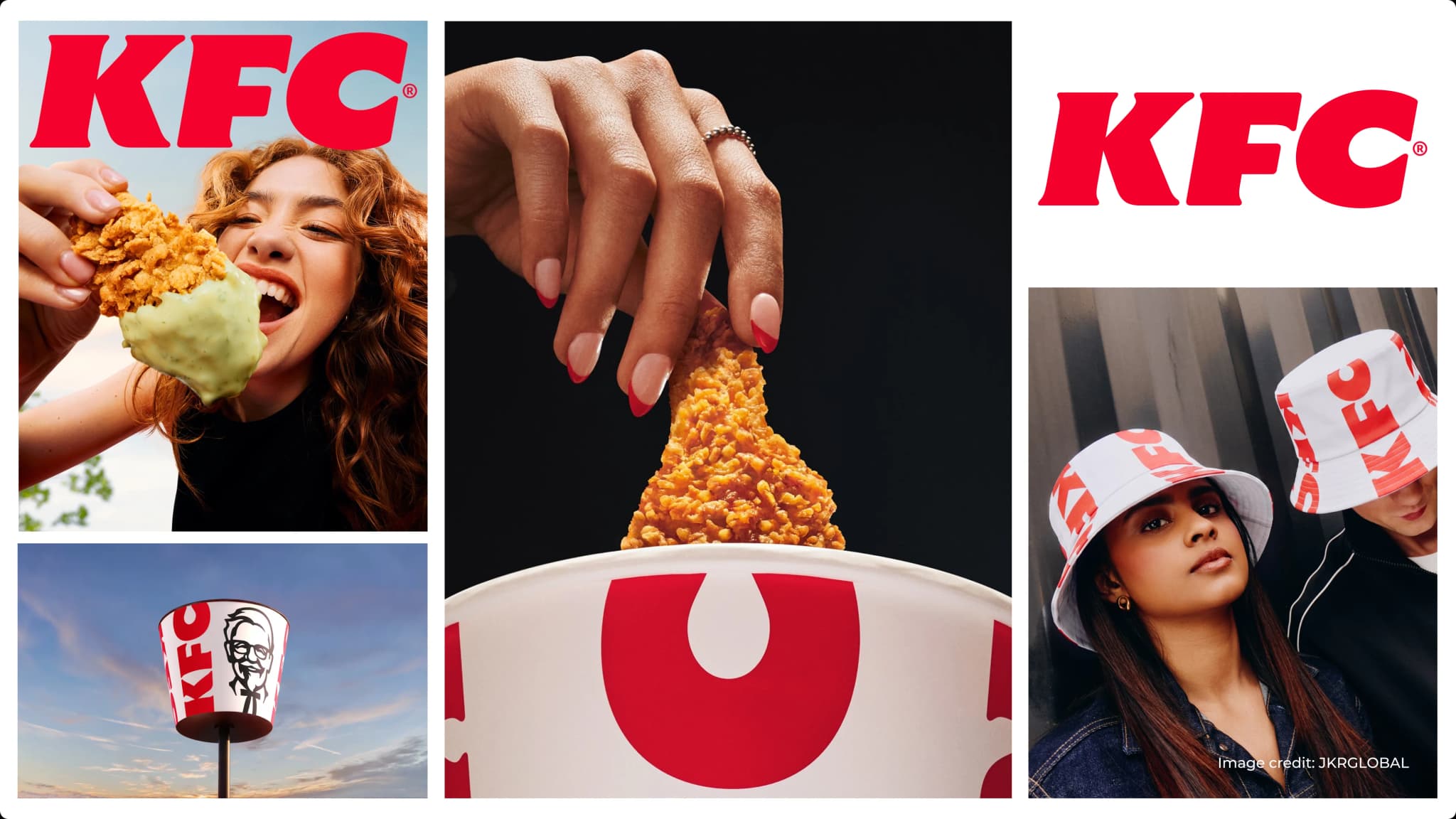
In its latest brand refresh, KFC and JKR have built a new identity system around one of the most recognizable pieces of packaging in the world. Instead of introducing something completely new, they focused on strengthening what people already associate with the brand.
The result is a more modern, flexible and expressive identity that helps KFC connect with younger audiences while staying true to its heritage.

For years, the bucket was simply packaging. Now it has become the foundation of the entire visual identity.
The red and white bucket stripes have been expanded into a design system that can work across packaging, advertising, digital experiences, restaurants, merchandise and social media.
The KFC logo has also evolved. Instead of existing as a flat graphic, it has been reimagined as a three-dimensional asset that feels more dynamic and adaptable across different formats and screens.
The overall identity is bolder, cleaner and more flexible, helping KFC create a consistent experience wherever customers interact with the brand.

Fast-food brands are competing in a very different world today.
Customers see them on delivery apps, social media feeds, digital screens, mobile apps and creator content.
That means brands need visual systems that work everywhere.
KFC's previous identity relied heavily on logos and traditional branding elements. The new system focuses more on distinctive assets that people can recognize instantly, even without seeing the full logo.
The bucket becomes a shortcut for the brand. Even if you remove the name, the colors, shapes and stripes are enough for many people to know it's KFC.
That's incredibly valuable because strong brand recognition doesn't come from showing the logo everywhere. It comes from creating visual elements that people remember.


The old KFC identity was largely logo-led. The new identity is asset-led.
Earlier, the Colonel Sanders logo was often the main focus, while elements like the bucket acted as supporting visuals. In the refreshed system, the bucket becomes a hero asset and is treated almost like a logo in its own right. This is a significant change because it gives KFC a recognizable symbol that works even when the logo is absent.
The visual language has also become more immersive and expressive. The bucket is no longer shown only as packaging, it is used as a stage, a graphic device and a storytelling tool. Combined with richer photography, bolder layouts and more dimensional branding, the entire identity feels designed for today's digital-first world.
For designers, this is a great example of how modern rebrands are moving away from designing logos and toward designing systems.


