Most World Cup campaigns focus on advertisements.
Coca-Cola decided to focus on something people interact with every day, the packaging itself.
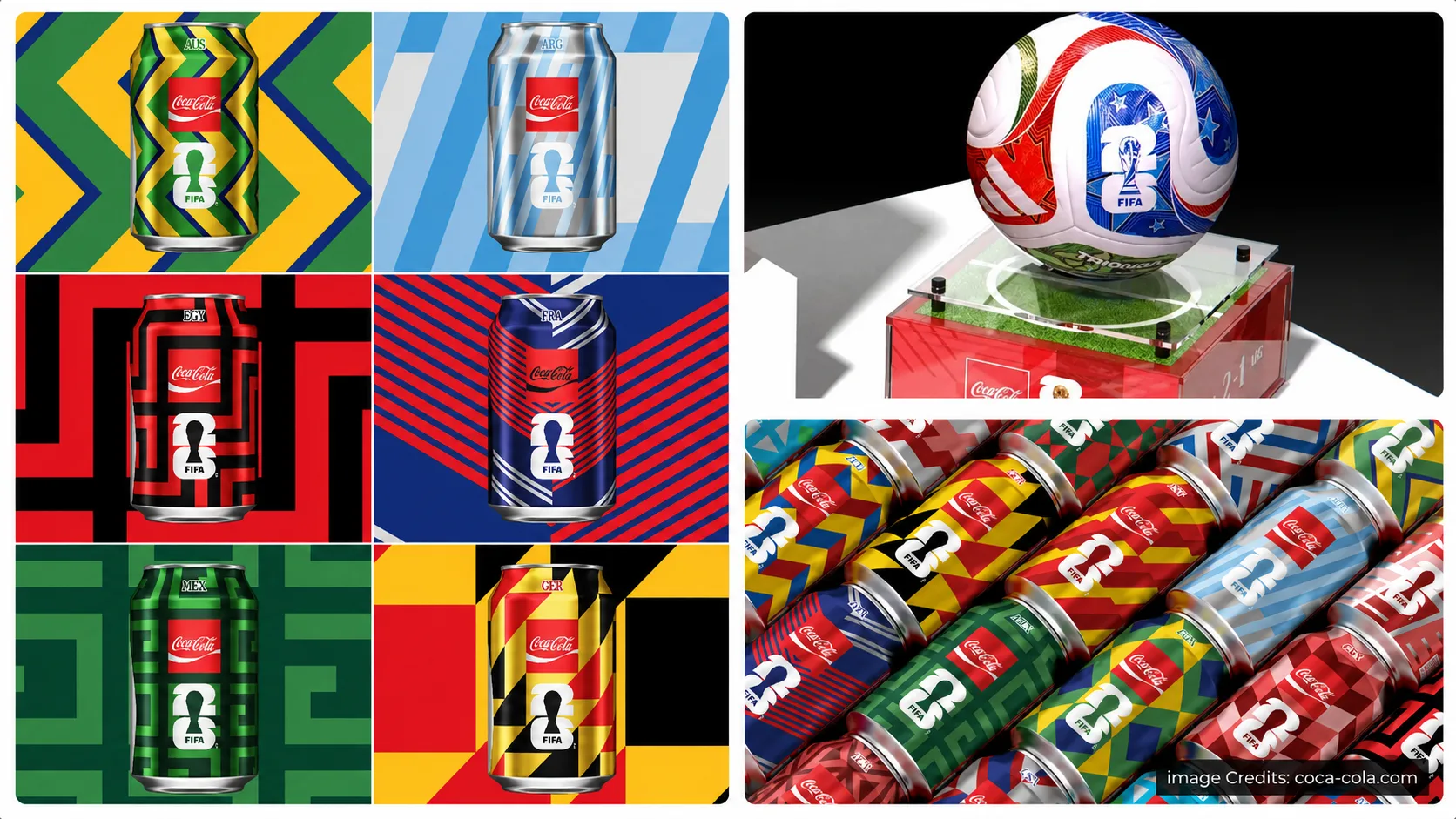
For the FIFA World Cup 2026, Coca-Cola has launched a new global visual identity and collectible packaging system designed by GOLDEN. The campaign spans 48 participating nations and three host countries, creating a unified design system that can work across markets while still celebrating individual teams and fans
The limited-edition cans combine Coca-Cola's iconic visual assets with country-specific elements such as national colors, team-inspired graphics and player photography.
The first collection includes special edition cans representing countries such as Canada, Argentina, Brazil, England, France, Germany, Spain and Portugal.

The packaging gives fans something personal to connect with while keeping Coca-Cola at the center of the experience.
The collectible nature of the cans also creates a reason for people to come back. Fans aren't just buying a drink but collecting countries, teams and memories connected to the tournament.
This transforms packaging from a container into a piece of fan culture.
The campaign also extends beyond the physical product. QR codes on the cans give digital experiences and additional content, creating a connection between the package and the broader World Cup experience.

Traditionally, sports-themed packaging often adds event graphics around an existing product pack. Here, the tournament has been added directly into the visual language.
If you are a designer, this is a great example of how modern packaging design is evolving from branding products to building ecosystems. The can is still selling a drink, but it is also telling a story, creating collectability, encouraging participation and connecting fans to a larger global event.
That's a much bigger role than packaging traditionally played.


